Hash Values in Digital Forensics: Ensuring Evidence Integrity and Combating Collision Risks
Hash Values
Hash values are the unsung heroes of digital forensics. These small strings of text serve as unique identifiers for data, ensuring it has not been tampered with during storage or transmissions. A hash function processes an input, whether it’s a file, text, or any other digital content, and generates a fixed-size alphanumeric string that represents the data. This process is deterministic, meaning the same input always produces the same hash value. Hash values are crucial in digital forensics for authenticating evidence, identifying duplicates, and filtering known files but their reliability hinges on the strength of the hash function used.
When hashes go wrong
A hash function’s job is to generate unique outputs for unique inputs, but what happens if two different pieces of data produce the same hash value? That’s called a collision, also known as a big problem. Collisions are inevitable in theory because hash functions map an infinite number of possible inputs to a finite number of set outputs; that number depends on the algorithm. Older algorithms like MD5 and SHA-1, considered secure in the past, are now considered insecure due to their susceptibility to collisions. In the early 2000s, researchers demonstrated practical ways to generate collisions with MD5, and collision attacks on SHA-1 had been publicly documented in 2017.

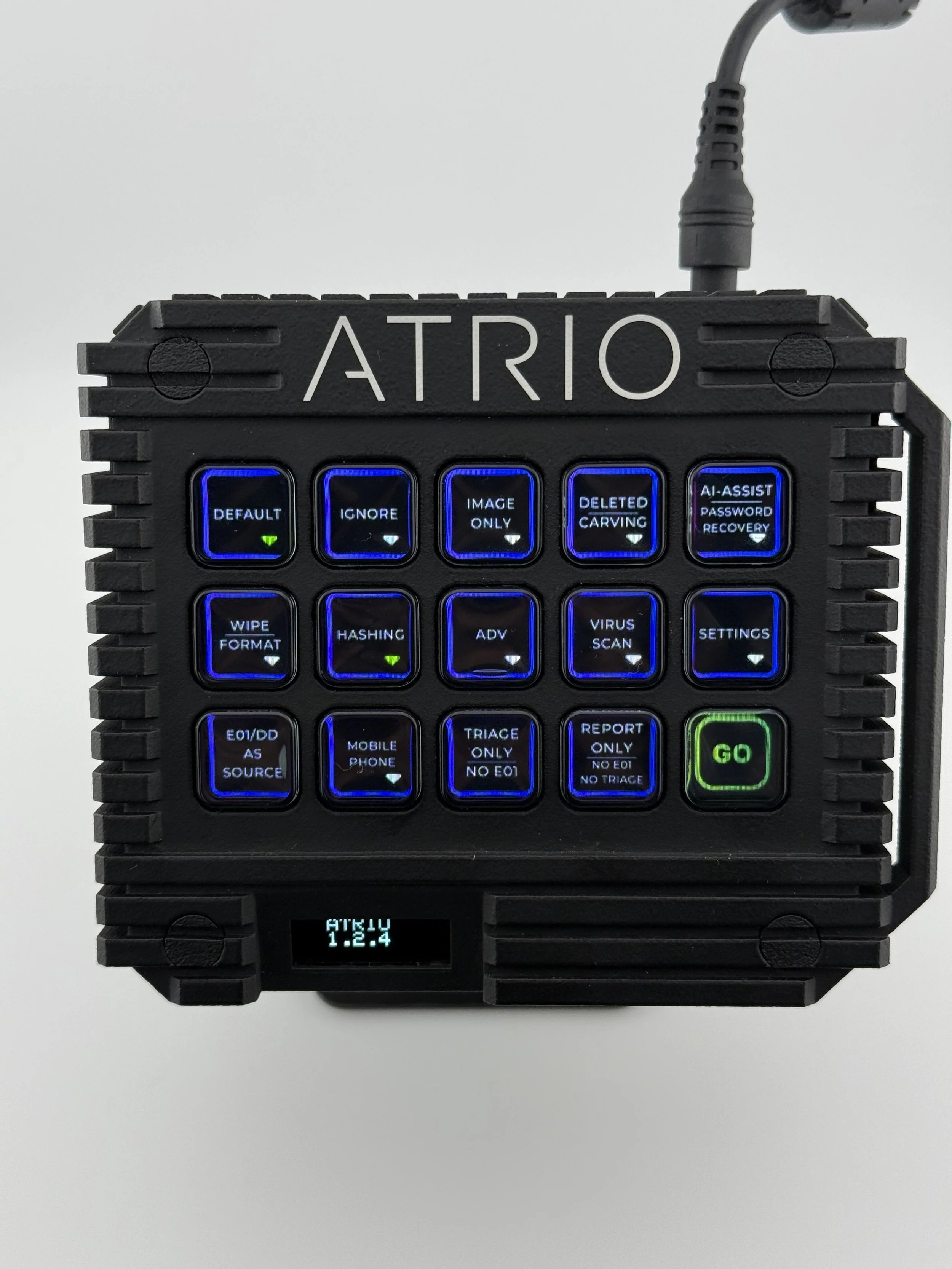
ATRIO MK II
Running Hashing Option on Case
Risks to Investigators
The risks of hash collisions in digital forensics are significant. For example, a collision could allow a tampered file to match the original evidence file's hash, jeopardizing an investigation's integrity. Incident response investigations are also affected, for example a malicious actor might use collisions to bypass file integrity checks or digital signature systems. To mitigate these risks, the digital forensics community has started to shift to more robust hashing algorithms such as SHA-256. In addition, many forensic tools implement a multi-hash approach, generating hashes with multiple algorithms like MD5, SHA-1, and SHA-256 simultaneously. This approach balances backward compatibility with the enhanced security of modern algorithms.
Final Thoughts
In conclusion, hashing is a cornerstone of digital forensics. It enables investigators to verify the integrity of evidence, detect file tampering, and streamline the analysis of large datasets. However, the reliability of hashing depends on the algorithm's strength. Hash collisions, where two different inputs generate the same hash value, highlight the vulnerabilities of outdated algorithms like MD-5 and SHA-1. To safeguard the integrity of investigations, examiners should adopt standards such as SHA-256, which offers robust collision resistance, into their verification practice. This can be quickly done when implementing a multi-hash approach to ensure backward compatibility and cross-verification. By adopting more robust hash algorithms, updating best practices, and documenting hashing methods for legal admissibility, digital forensic professionals can maintain the trustworthiness of their analyses and uphold the critical principles of evidence integrity and authenticity.
If you want to know more about how ATRIO performs its hashing functions and how it can help with your investigations, click the Contact Us link, and we will be happy to demo its features.
Want to learn more about ATRIO’s Triage Capabilities? Request a demo!